Every traveller carries a home country differently. Mine is an island nation in the South Pacific that most people picture as a beach resort. They're not wrong — but they're missing most of it.
I grew up in Fiji. I've since lived in London, worked across four continents, attended events from Islamabad to Riga, and built a career around experiences at the far end of the luxury scale. And still, when I return to Fiji — when the plane descends and I can see the reef changing colour through the window — something settles that I didn't know was unsettled.
"The Fijian word bula means both hello and life. It is not a greeting. It is a worldview."
What Fiji Actually Is
The Fiji that fills brochures is real: turquoise water, white sand, the kind of warmth that isn't just temperature. But what the brochures miss is the people. Fijian hospitality is not a service standard — it is a philosophy that predates the tourism industry by several centuries and will outlast it comfortably.
The Fijian word bula means both hello and life. It is not a greeting. It is a worldview. When a Fijian person looks at you and says bula, they are not performing welcome — they are making a small act of acknowledgement that you exist, that your presence has value, that the encounter matters. Spend enough time in Fiji and you start to see how much is lost in cultures where hello is just hello.
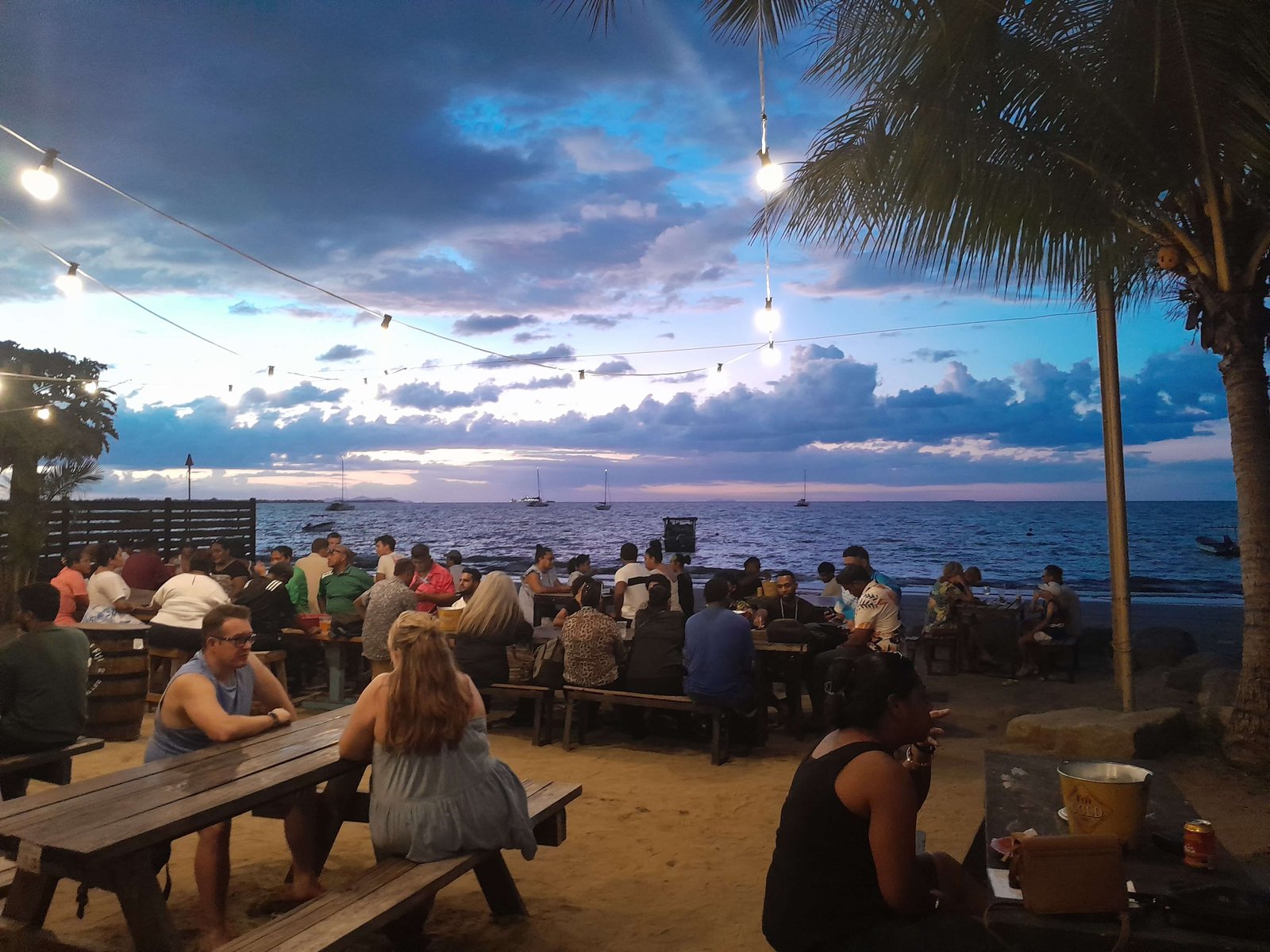
The beach bars at sunset — wooden benches in the sand, fairy lights strung between palms, the ocean turning purple and silver in the last light, friends arriving in no particular order for no particular reason — that is as authentically Fijian as the grand resorts on the private islands. The distinction between celebration and ordinary life is deliberately blurred in Fiji. Every evening is an occasion.
Fire, Ceremony, and Living Tradition
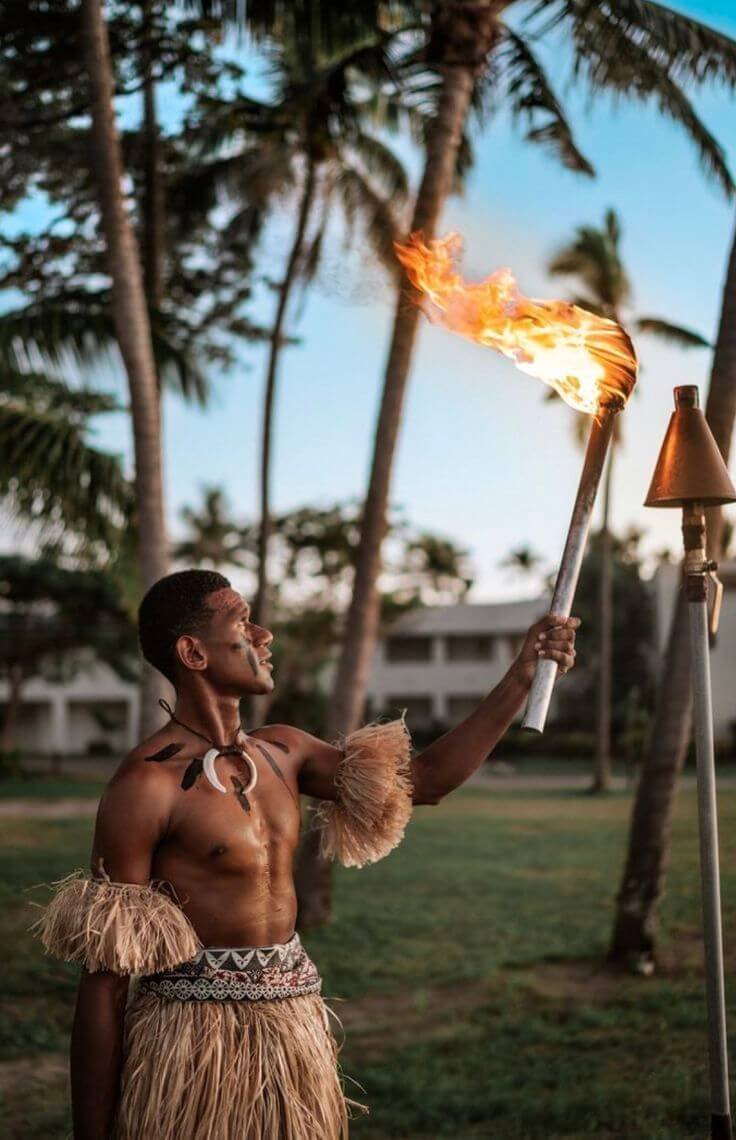
A Fijian fire performer at dusk — traditional dress, whale tooth necklace, face paint
Fijian cultural performance — the meke, the fire walking, the kava ceremony — is not folklore preserved for tourists. These are living traditions, performed by practitioners who trained for years, who carry cultural lineage in every gesture. When a Fijian fire performer raises a lit torch against a dusk sky, wearing the traditional sulu and tabua necklace, face painted and utterly focused, you are watching something that has continued mostly unchanged for generations.
It is partly why I built the South Pacific performer strand of Mirae Lifestyle. The artists I work with carry this culture with them when they travel. Booking them is not just booking entertainment — it is facilitating a cultural exchange that audiences rarely get access to otherwise. A fire dancer at a corporate event in London brings something that cannot be replicated by any other kind of performance. It is specific. It is ancient. It demands presence from everyone in the room.
"Booking a South Pacific performer is not just booking entertainment. It is facilitating a cultural exchange."
Why You Should Go
If you are considering Fiji and waiting for the right moment: the right moment is now, and the right duration is longer than you're planning. Most first-time visitors book a week. Most wish they'd booked two.
Fly into Nadi. Take a boat to the outer islands — the Yasawa group, or the Mamanucas for something more accessible — if you can. Stay in one place long enough that the pace of life starts to feel normal rather than slow. That's when Fiji begins. The first three days are still you on holiday. After that, you start to actually arrive.
Planning Notes
When to go: May to October for the dry season. December to April can be beautiful but brings cyclone risk — avoid January and February specifically.
Getting there: Fiji Airways flies direct from London Heathrow (roughly 20 hours with one stop). Nadi International Airport is the main hub.
The outer islands: The Yasawa Islands require a Blue Lagoon Cruises ferry or light aircraft. Worth the extra step. Sawa-i-Lau cave is extraordinary — bring a torch and a willingness to swim.
Kava ceremony: Accept every kava invitation. Bring your own yaqona root as a gift if staying with a local family. The ceremony matters more than the drink.
Stay: Laucala Island for absolute seclusion and one of the most beautiful properties in the Pacific. Six Senses Fiji for a more accessible luxury experience. For something smaller and personal, ask me — there are family-run guesthouses on the outer islands that won't appear in any guide.
Fiji will change something small in you. It does this quietly, without announcement. You'll notice it when you get home — in the way you greet people, in the patience you have for an unhurried evening, in the slight sense that something moved while you were there and hasn't moved back. That's the right response. Let it stay.